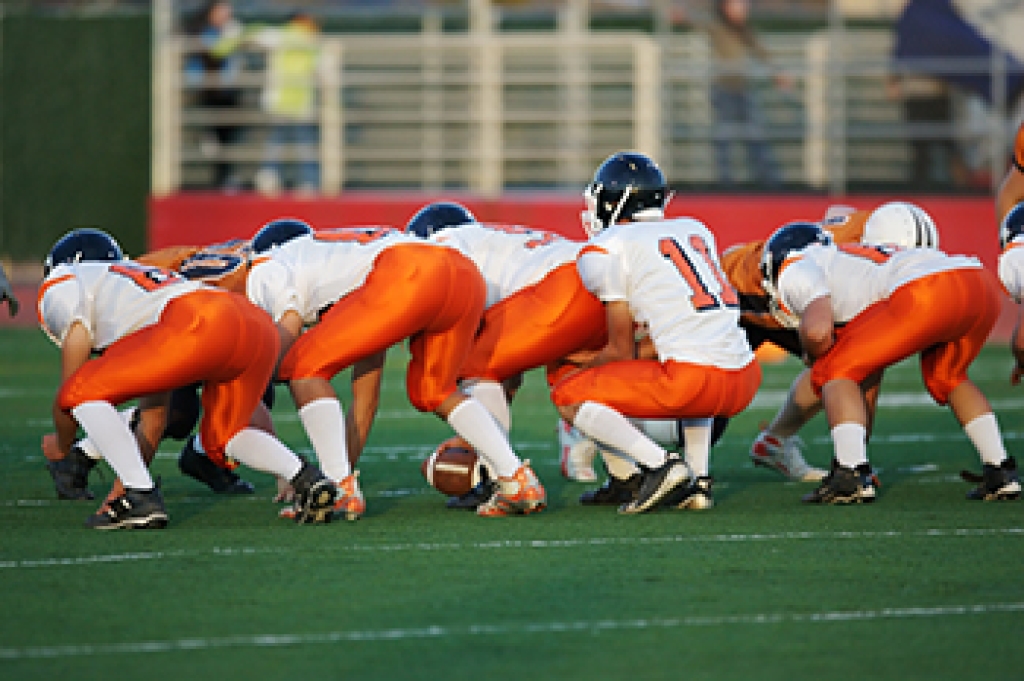
A forceful push off the ground or a tackle can leave a football player with pain at the base of the big toe. This injury is often known as turf toe. It is actually a sprain of the tissues that support the big toe joint. Turf toe occurs when the toe bends upward beyond its normal range as the front of the foot stays planted. Another player landing on a raised heel can also create this force. Although the name points to artificial turf, the injury also occurs on natural grass. Football cleats with very flexible soles allow greater bending at the toe, which places added strain on the supporting tissues.
Symptoms of turf toe depend on how severely the joint is sprained. A mild sprain causes tenderness and slight swelling, while a more serious injury produces bruising and difficulty pushing off. Pain can interfere with sprinting, cutting, and maintaining balance during a play. Some players notice symptoms immediately after a tackle. Others experience discomfort that builds with repeated stress on the joint. Grade 1 injuries involve stretching of the supporting tissues. Grade 2 injuries involve a partial tear, while grade 3 injuries involve a complete tear. Continuing to play through pain risks further damage, resulting in a longer recovery.
A podiatrist examines the affected big toe and asks how the injury happened. The examination checks joint movement, tenderness, and stability. The podiatrist also evaluates the player's ability to bear weight and push off the foot. X-rays help identify broken bones or changes in joint alignment. An MRI scan provides detailed images of the supporting tissues when the examination suggests a significant tear. An accurate diagnosis helps distinguish turf toe from a fracture or another cause of big toe pain. Players with marked swelling or difficulty bearing weight need a prompt medical evaluation rather than waiting for symptoms to worsen.
Treatment focuses on protecting the injured joint and restoring safe movement. A podiatrist applies supportive taping or prescribes a rigid shoe insert to limit excessive bending. More substantial injuries require a walking boot or cast to keep the joint protected while it heals. Follow-up visits allow the podiatrist to assess healing and guide a gradual return to sports activity. Clearance depends on joint stability and the ability to perform football movements without significant pain. Reviewing cleat fit and sole stiffness also helps reduce stress on the recovering toe. If you have symptoms of turf toe, it is suggested that you schedule an appointment with a podiatrist for a diagnosis and appropriate treatment.
Toe pain can disrupt your daily activities. If you have any concerns, contact one of our podiatrists of Bangor Podiatry. Our doctors can provide the care you need to keep you pain-free and on your feet.
What Causes Toe Pain?
Most severe toe pain is caused due to a sports injury, trauma from dropping something heavy on the toe, or bumping into something rigid. Other problems can develop over time for various reasons.
Toe pain can be caused by one or more ailments. The most common include:
- Trauma
- Sports injury
- Wearing shoes that are too tight
- Arthritis
- Gout
- Corns and calluses
- Hammertoe
- Bunions
- Blisters
- Ingrown toenails
- Sprains
- Fractures (broken bones)
- Dislocations
When to See a Podiatrist
- Severe pain
- Persistent pain that lasts more than a week
- Signs of infection
- Continued swelling
- Pain that prevents walking
Diagnosis
In many cases the cause of toe pain is obvious, but in others, a podiatrist may want to use more advanced methods to determine the problem. These can range from simple visual inspections and sensation tests to X-rays and MRI scans. Prior medical history, family medical history, and any recent physical traumatic events will all be taken into consideration for a proper diagnosis.
Treatment
Treatments for toe pain and injuries vary and may include shoe inserts, padding, taping, medicines, injections, and in some cases, surgery. If you believe that you have broken a toe, please see a podiatrist as soon as possible.
If you have any questions please contact our offices located in Bangor, Gilbert, and Bethlehem, PA . We offer the newest diagnostic and treatment technologies for all your foot and ankle needs.
